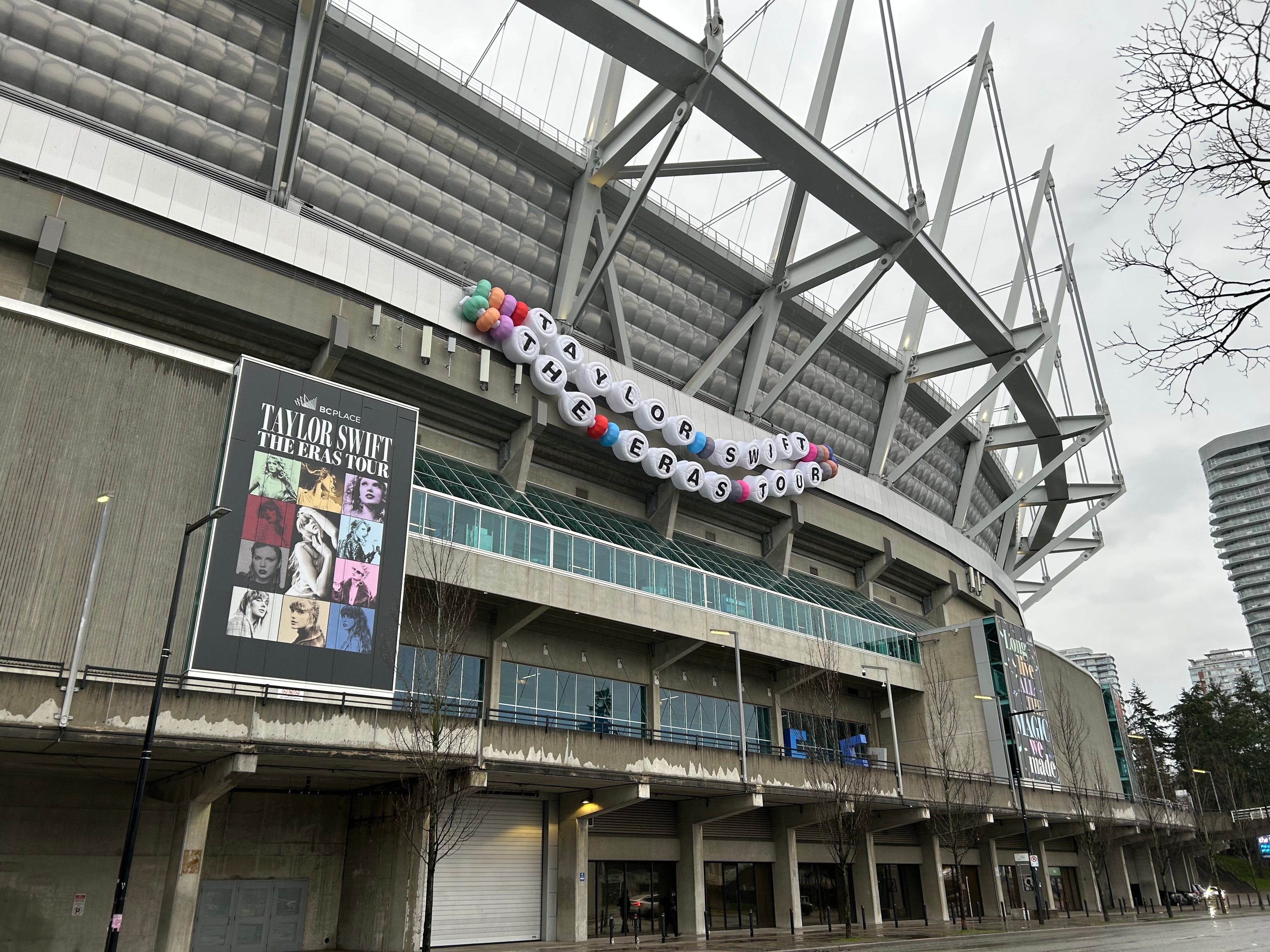
On Friday, April 24, Taylor Swift's management company filed three trademark applications with the U.S. Patent and Trademark Office. Two were sound marks covering her voice saying "Hey, it's Taylor Swift" and "Hey, it's Taylor." The third was a visual trademark protecting a specific image of Swift holding a pink guitar in a multicolored bodysuit.
On the surface, it reads like another savvy legal maneuver from pop music's most meticulous strategist. But the filings represent something far bigger than brand protection. They're an attempt to answer a question that the entire music industry has been fumbling for the past three years: In an age when anyone with a laptop can conjure a convincing replica of your voice, who actually owns the sound you make?
The 'Trademark Yourself' Playbook
Swift isn't inventing this strategy from scratch. She's following a trail blazed by Matthew McConaughey, whose legal team secured eight trademarks from the USPTO in 2025, including a sound mark on his signature "Alright, alright, alright" catchphrase. The theory behind both moves: traditional right-of-publicity laws, which vary by state, weren't designed for an era when AI can produce convincing imitations that never technically copy an existing recording.
Intellectual property attorney Josh Gerben, who spotted Swift's filings, laid out the logic in a blog post: "Theoretically, if a lawsuit were to be filed over an AI using Swift's voice, she could claim that any use of her voice that sounds like the registered trademark violates her trademark rights." The image-based filing works on the same principle. By locking down a specific visual, down to the jumpsuit and pose, Swift's team could pursue claims against AI-generated images that evoke her likeness without directly copying any single photograph.
Trademark law has a built-in advantage over copyright here. Copyright protects specific recordings. Right of publicity varies state by state. But a trademark infringement claim can be filed in federal court, and it applies nationwide. If an AI-generated voice is "confusingly similar" to a registered sound mark, there's a legal foothold that didn't exist before. It's untested in court, but the architecture is clever, and other celebrities will almost certainly follow.
How We Got Here: Three Years of Chaos
The catalyst for all of this arrived in April 2023, when an anonymous producer called Ghostwriter977 posted "Heart on My Sleeve" to streaming platforms. The track featured AI-cloned vocals convincingly mimicking Drake and The Weeknd. It racked up hundreds of thousands of streams before Universal Music Group pulled it down, calling it "infringing content created with generative AI." On YouTube alone, the track hit 197,000 views in two days.
"Heart on My Sleeve" was a proof of concept that terrified the industry. Not because the song was particularly good, but because it was good enough. The technology had crossed a threshold where casual listeners couldn't reliably distinguish the AI from the real thing. And Ghostwriter wasn't done. The anonymous creator later submitted the track for Grammy consideration, forcing the Recording Academy to grapple with whether AI-generated music even qualified for awards.
Swift herself has been a frequent target. Her likeness has appeared in AI-generated pornographic images that circulated widely online in early 2024. Meta's AI chatbots were caught producing content using her persona without consent. During the 2024 presidential campaign, Donald Trump shared AI-generated images falsely suggesting Swift had endorsed him. Each incident underscored the same vulnerability: the technology was outrunning the legal guardrails.
Lawsuits, Settlements, and the Price of Training Data
The legal counterattack began in earnest in June 2024, when the RIAA, on behalf of Universal, Warner, and Sony, filed landmark lawsuits against Suno and Udio, the two most prominent AI music generation platforms. The core allegation: both companies had trained their models on copyrighted music without permission, producing outputs that could compete directly with the original works.
What followed was less a decisive legal victory and more a negotiated retreat. Universal Music Group settled with Udio in October 2025. Warner Music Group settled with both Udio and Suno the following month. The deals included licensing agreements: WMG artists could opt in to let their works be used to develop new AI-powered music creation services. As part of Warner's settlement with Suno, the two companies announced a joint venture where users could create AI-generated music using the voices and likenesses of consenting artists.
Critics were quick to point out the uncomfortable math. As Forbes reported, the settlements essentially validated a "launch, train, settle" business model: build an AI tool by scraping copyrighted material without permission, wait to get sued, then negotiate a licensing deal that legitimizes what you already built. Sony, notably, did not settle, and its case against Udio remains active.
Meanwhile, Germany's performing rights organization GEMA filed its own lawsuit against Suno, with a ruling scheduled for June 2026. European courts have generally taken a harder line on creator protections, and a strong ruling there could ripple across global platform policies.
The Legislative Arms Race
Tennessee drew first blood on the legislative front. In March 2024, Governor Bill Lee signed the ELVIS Act (Ensuring Likeness Voice and Image Security Act), making Tennessee the first state to explicitly protect musicians' voices from unauthorized AI impersonation. The law, which took effect on July 1, 2024, updated Tennessee's existing Protection of Personal Rights statute to include voice alongside name, photograph, and likeness. For a state whose music industry supports over 60,000 jobs and contributes $5.8 billion to the national GDP, the stakes were tangible.
At the federal level, the NO FAKES Act (Nurture Originals, Foster Art, and Keep Entertainment Safe Act) has been through multiple iterations since its first introduction as a discussion draft in 2023. Formally introduced in 2024 and reintroduced in April 2025, the bipartisan bill would create a federal right for individuals to control the use of their voice, image, and likeness in AI-generated content. It hasn't passed yet, but its continued momentum signals that federal action is a question of when, not if.
Across the Atlantic, the EU AI Act, which began phased implementation in 2025, requires AI systems that generate content to disclose when output is AI-generated and to comply with copyright law in their training data. Full compliance deadlines extend to 2027 for companies already operating in the EU. It's a framework that prioritizes transparency, and one that many American musicians wish they had at home.
The Indie Gap: When Legal Armor Is a Luxury Good
Here's where the conversation gets uncomfortable. Taylor Swift can afford to file three trademark applications. She has a team of lawyers at Venable handling it. McConaughey secured eight trademarks. Major label artists have the infrastructure of Universal, Warner, and Sony behind them, companies with legal departments built to fight exactly these battles.
A DIY artist pressing 500 copies of their debut LP does not have that infrastructure. And they're arguably more vulnerable to AI's disruption, not less.
The streaming fraud case is illustrative. In March 2026, a North Carolina man pleaded guilty to defrauding streaming platforms out of more than $10 million in royalties. Between 2017 and 2024, he used AI-generated music and bot farms to accumulate as many as 661,440 fraudulent streams per day, pulling over a million dollars annually from the royalty pool that all artists share. Every fake stream that pays out is money taken directly from legitimate musicians, and indie artists operating on razor-thin margins feel that theft the hardest.
Then there's the Velvet Sundown problem. In July 2025, an ostensible indie band racked up a million plays on Spotify before an "adjunct member" admitted the project was an "art hoax" that had used the generative AI platform Suno to create its music. France's streaming service Deezer ran its detection tools and declared the music 100% AI-generated. The Velvet Sundown had Spotify verification, cover art, a social media presence. They looked real. For an actual indie band trying to build an audience, competing against phantom projects that can generate albums overnight is demoralizing in a way that's hard to overstate.
The Guardian reported in December 2025 on the growing disconnect between how major labels and working musicians view the AI landscape. While UMG, Warner, and Sony were cutting licensing deals with the same AI companies they'd sued months earlier, independent artists and their advocates were raising alarms about the long-term financial implications. One source warned that artists shouldn't think of themselves as "entities that will be unaffected, because the entire ecosystem will experience a knock-on effect financially."
The Other Side of the Mirror: AI as Creative Instrument
Not every artist sees AI as the enemy. And reducing the conversation to a binary of embrace-or-reject misses some of the most interesting things happening at the margins.
Holly Herndon, the experimental electronic composer, launched Holly+ back in 2021, an AI-powered "digital twin" that allowed anyone to upload audio files and receive a new version sung in her voice. It was one of the first artist-led experiments in voice cloning, and Herndon approached it as a creative collaboration rather than a concession. The key difference: she maintained control over how the technology was deployed, and she consented to its use.
Grimes took it further in 2023, launching Elf.Tech, an open-source software program that let anyone generate music in her voice. She offered a 50/50 royalty split for any commercially released tracks. "I have no label and no legal bindings," she wrote on social media. "I think it's cool to be fused with a machine and I like the idea of open-sourcing all art and killing copyright." It was a radical position, and it illuminated the central tension: for artists who own their masters and control their distribution, AI voice-cloning can be a tool for audience expansion. For artists who don't, it's a tool for exploitation.
Recording Academy CEO Harvey Mason Jr. told Billboard in late 2025 that "every" songwriter and producer he knows has used generative AI tools. The technology has infiltrated the production process at every level. Meanwhile, The Atlantic observed in December 2025 that Suno's core function makes it "debatably, a plagiarism machine," even as the company argued that its outputs are "new sounds." The same tools that let a bedroom producer sketch out arrangements in minutes can flood streaming platforms with algorithmically generated content that competes for listener attention.
There's a version of this future that's genuinely exciting. AI as a sketchpad for songwriters who hear melodies they can't yet play. AI as a production assistant that handles the tedious technical work so artists can focus on the ideas that matter. AI as a way for a solo artist in a basement apartment to sound like they have a full band.
And there's a version that's bleak. AI as a replacement for session musicians. AI as a tool for labels to generate infinite content without paying human creators. AI as a way to strip-mine the emotional labor of artistry while cutting the artists out of the revenue stream.
Which version we get depends almost entirely on the decisions being made right now.
200 Artists, One Message
In April 2024, the Artist Rights Alliance published an open letter signed by over 200 musicians calling for protections against what they termed the "predatory" use of AI in the music industry. The signatories included Billie Eilish, Nicki Minaj, Stevie Wonder, Katy Perry, the estates of Frank Sinatra and Bob Marley, and members of bands like R.E.M. and Mumford & Sons.
The letter warned that powerful companies were using original creative work to train AI models that could "eventually replace human musicians altogether." It called for the responsible use of AI that protects artists' rights and livelihoods. A year later, the settlements between major labels and AI companies suggest the industry heard the message but drew a different conclusion: instead of stopping the train, they decided to buy a ticket.
What Happens Next
The next two years will be definitive. GEMA's lawsuit against Suno, with a ruling expected in June 2026, could establish the first major European precedent for how copyright law applies to AI-trained music models. Sony's ongoing case against Udio will test whether the "launch, train, settle" playbook survives a plaintiff that refuses to deal. The NO FAKES Act, if it passes, would give every American a federal right to control their digital likeness, not just celebrities who can afford to trademark their own voice.
Spotify's tightened AI policies, announced in September 2025, represent the platform side of the equation. The streaming giant said it supports artists' freedom to use AI creatively while "actively combating its misuse by content farms and bad actors." In 2024 alone, Spotify reportedly removed tens of millions of spam tracks that violated its content policies, many created with AI tools. Whether those enforcement measures can keep pace with the volume of AI-generated content remains an open question.
For fans, the implications are more subtle but no less real. When you discover a new artist on a playlist, can you be sure they exist? When you hear a voice that sounds like your favorite singer on a track they never recorded, does it matter to you? The answer, increasingly, is that it matters a great deal. Music is built on a relationship between the person who makes it and the person who hears it. When that relationship becomes a simulation, something essential is lost.
The Sound of Ownership
Taylor Swift filing a trademark on the sound of her own voice is a strange artifact of 2026, the kind of legal maneuver that would have been inconceivable a decade ago. But it captures something real about where we are. The technology to replicate a human voice, a human image, a human creative identity, has arrived. The legal and ethical frameworks to govern that technology are still being assembled, piece by piece, law by law, settlement by settlement, trademark application by trademark application.
For major artists with resources, the path forward involves aggressive legal strategies and negotiated licensing deals. For indie musicians, the landscape is more precarious: the same royalty pools they depend on are being diluted by fraudulent streams, the same platforms they use to find audiences are filling up with phantom competitors, and the same labels that sign them are cutting deals with AI companies that could eventually make human creators optional.
The fight over AI in music isn't really a fight about technology. It's a fight about whether the people who make music get to decide how their work is used. That's a question as old as the industry itself. The only thing that's changed is the scale of what's at stake.